
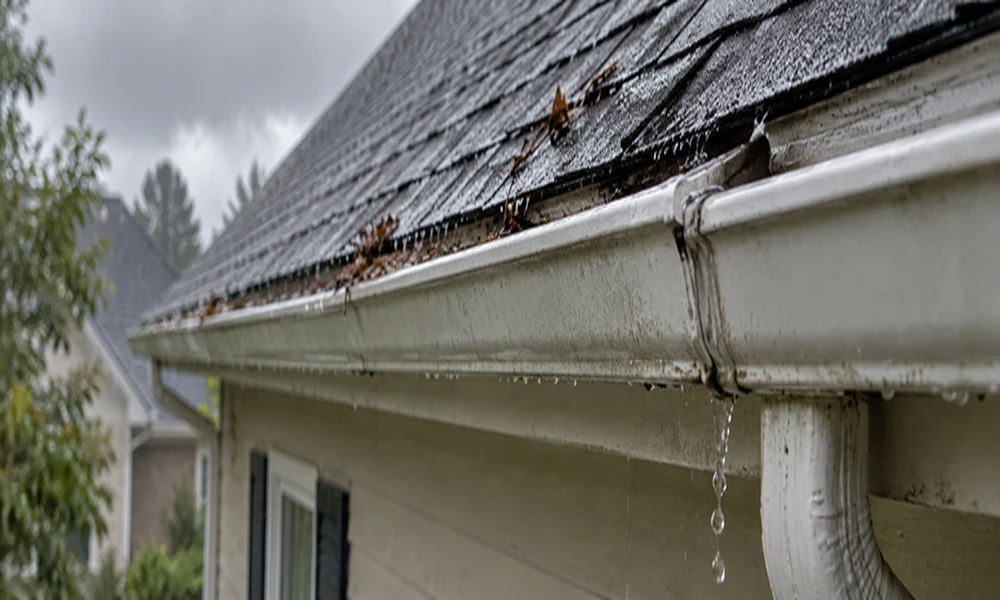

A leaking or sagging gutter does not automatically mean the entire system needs to be replaced. In many cases, a localized repair can restore proper drainage and extend the useful life of the existing gutters.
The harder question is knowing when repeated repairs are addressing the real problem and when they are simply postponing a replacement that has become necessary.
Homeowners can make a better decision by looking beyond a single leak or loose section and considering the condition and performance of the gutter system as a whole.
Start With the Scope of the Problem
The difference between a repair and replacement often comes down to whether the problem is isolated or widespread.
A small leak at one joint, a loose fastener, or a damaged section caused by an isolated incident may be repairable without replacing otherwise functional gutters. Similarly, a downspout connection that has come loose does not necessarily indicate a problem with the entire system.
Multiple problem areas deserve more attention.
Leaks appearing in several sections, gutters repeatedly pulling away from the roofline, or drainage problems occurring in different parts of the house may indicate that the system is no longer performing reliably.
Before choosing either option, inspect the full gutter run rather than focusing only on the most visible trouble spot.
Look for Problems That Keep Coming Back
Recurring repairs can be an important warning sign.
If the same gutter section needs frequent sealing, fastening, or realignment, there may be an underlying problem that a small repair is not solving. The issue could involve the gutter’s condition, its attachment to the fascia, improper slope, drainage capacity, or another part of the roofline drainage system.
This is particularly important when several components are involved. For example, water appearing behind a gutter should not automatically be treated as a simple gutter leak. The condition of the fascia, roof edge, gutter attachment, and nearby drainage components may also need to be evaluated.
A good repair should correct a specific problem rather than become part of a cycle of temporary fixes.
Know When Replacement Becomes the More Practical Option
Replacement deserves consideration when deterioration or poor performance affects a substantial portion of the system.
Visible separation along multiple joints, extensive sagging, significant corrosion or deterioration, repeated leaks, or sections that no longer remain securely attached can make piecemeal repairs increasingly impractical.
Performance matters just as much as appearance. Gutters are intended to collect roof runoff and direct it toward appropriate discharge points. A system that looks acceptable but consistently allows water to spill over, escape behind the gutter, or drain poorly may still require corrective work.
For homeowners who determine that a new system is the sensible next step, researching professional gutter installation in Carmel can help clarify the installation and related drainage services available locally.
The important point is not to replace gutters simply because they have one defect. Replacement makes more sense when the overall system can no longer perform reliably or when repairing numerous individual problems becomes inefficient.
Consider the Entire Drainage Path
Gutters are only one part of the water-management system around a home.
Water must first enter the gutter correctly, travel through the gutter run, enter the downspout, and then discharge in a location where it can move away from the structure appropriately. A problem anywhere along that path can make the gutters appear ineffective.
For that reason, homeowners should also pay attention to downspouts. A functioning gutter will not solve a drainage problem if the downspout is blocked, damaged, disconnected, or releasing water where it immediately collects near the house.
The fascia also deserves attention because it provides an important mounting surface along the roofline. If the material supporting the gutter is deteriorated, simply tightening the existing gutter may not provide a lasting solution.
Evaluating these components together can prevent unnecessary replacement while also reducing the chance of overlooking a problem outside the gutter itself.
Evaluate Condition Before Making a Cosmetic Decision
Appearance can influence replacement decisions, but function should come first.
Discoloration, dents, or older-looking gutters may be unattractive without necessarily preventing the system from working. Conversely, relatively clean-looking gutters may still have problems with alignment, attachment, leaking joints, or drainage.
Instead of judging the system primarily from ground level, homeowners should consider how it behaves during wet weather and whether there are recurring signs of poor water control.
Those observations can provide useful information when discussing repair or replacement with a professional.
Make Maintenance Part of the Decision
Maintenance history also affects whether a repair is likely to last.
Gutters that accumulate debris can overflow even when the system itself is structurally sound. Before assuming replacement is necessary, it is worth determining whether cleaning and routine maintenance can restore proper flow.
At the same time, maintenance cannot correct structural deterioration indefinitely. Cleaning will not solve damaged fascia, persistent separation, or sections that no longer maintain the alignment needed for drainage.
The best decision separates maintenance problems from structural or installation problems.
Conclusion
Choosing between gutter repair and replacement is less about the age of one component and more about the condition and performance of the entire drainage system.
Localized damage can often justify a targeted repair. Widespread deterioration, repeated failures, poor attachment, or continuing drainage problems may point toward a more comprehensive solution.
By evaluating the gutters, downspouts, supporting roofline components, and overall drainage path together, homeowners can make a more informed decision-and avoid both replacing a system unnecessarily and spending repeatedly on repairs that no longer address the underlying problem.
Repair or Replace? How to Know When Your Gutters Need More Than a Quick Fix
